The Old Granary, Barking
Location: Barking, London, UK
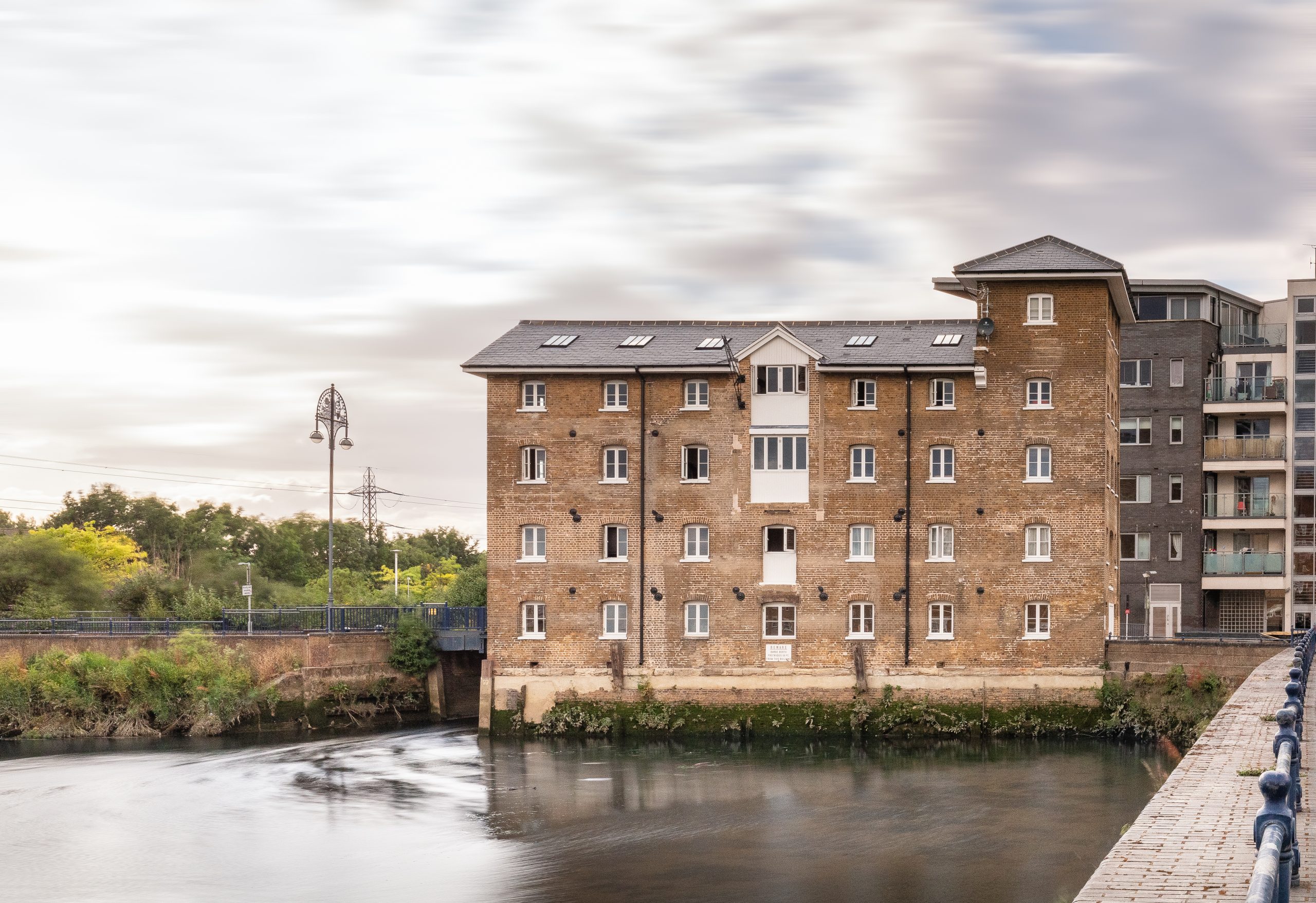
The Old Granary on Town Quay, Barking, is a Grade II‑listed Victorian riverside building dating from around 1870. Originally forming part of a much larger milling complex, the structure has recently been sensitively converted into a restaurant at ground level with six residential apartments above. Its prominent location on the River Roding and long industrial service life had left the masonry structure subject to a range of historic stresses, including settlement, vibration from heavy machinery, and prolonged exposure to moisture.
When the building was assessed for refurbishment and change of use, a detailed investigation of both the substructure and superstructure revealed several defects typically associated with heritage masonry buildings. These included localised subsidence, movement‑related cracking, reduced lateral restraint between walls and floors, and deterioration in several masonry arch features. Although previous underpinning works had addressed earlier movement, the extent and pattern of cracking indicated that a robust superstructure stabilisation solution was required to ensure long‑term performance under new residential loading conditions.
Structural repair challenges in historic masonry
The granary had been stripped back internally, providing clear visibility of structural defects but also exposing irregular brickwork, uneven bed joints and localised water damage. As a listed building, any remedial works needed to be minimally invasive, structurally effective, and sympathetic to the historic structure, while also meeting modern performance expectations.
The engineering team therefore sought repair methods that would:
- Strengthen and stabilise the existing masonry rather than replace it
- Limit disturbance to historic materials
- Be adaptable to irregular Victorian brickwork
- Deliver long‑term durability with discreet installation
Helifix products provided an ideal solution, offering proven performance in heritage and conservation settings.
The Solution
A combination of stainless steel Helifix HeliBars were specified to address the different structural requirements across the building.
Helifix Crack Stitching was installed across settlement‑related cracks to restore continuity within the masonry. Helifix HeliBars redistributed tensile forces along the wall, preventing cracks from reopening and accommodating normal thermal and moisture‑related movement without introducing stiffness that could damage the surrounding fabric.
Above openings where masonry arches showed signs of stress redistribution and reduced bearing capacity, Helifix HeliBars were used to form discreet reinforced masonry beams (Helibeams). These strengthened the load paths while allowing the original arches and brickwork to be retained in situ, avoiding unnecessary dismantling of historic elements.
At perpendicular wall junctions, Helifix Remedial Wall Ties were installed to reconnect walls and floors and restore lateral restraint. This significantly improved overall structural integrity and diaphragm action in areas originally constructed without modern tying details and previously affected by machinery‑induced vibration.

Photo Credit: © Nicholas Worley
Installation benefits on site
Despite irregular bed joints and variable masonry condition, the flexibility and slender profile of Helifix remedial solutions allowed installation to be carefully adapted to suit site conditions. Wider cracks were fully packed with non‑compressible repair materials before stitching, ensuring that compressive loads from thermal expansion or moisture changes would not cause further displacement.
Crucially, the non‑intrusive nature of Helifix systems meant that extensive demolition was avoided. Installation was fast and efficient, minimising disruption and helping the project remain on programme while protecting the building’s historic fabric.
Preserving character while improving performance
All visible repair works were completed using conservation‑appropriate materials. Repointing was carried out with traditional lime mortar, applied in a manner that clearly distinguished new work from original masonry without attempting to artificially age repairs.
By combining Helifix reinforcement with sympathetic finishing techniques, the project successfully balanced heritage conservation and modern structural performance. The Old Granary now meets current safety and robustness requirements while retaining the character and texture that define its historic value.
Want to learn more about structural repair techniques for the sustainable reuse of heritage masonry buildings?
In this Structural Engineer article, John Heseltine explores in greater depth the engineering techniques used to stabilise and strengthen existing masonry. Including the reconnection of perpendicular walls, installing helical bars to stitch cracks and to act as lintels above masonry arches, and pinning arch bricks to reinstate integrity.
Find Out More